

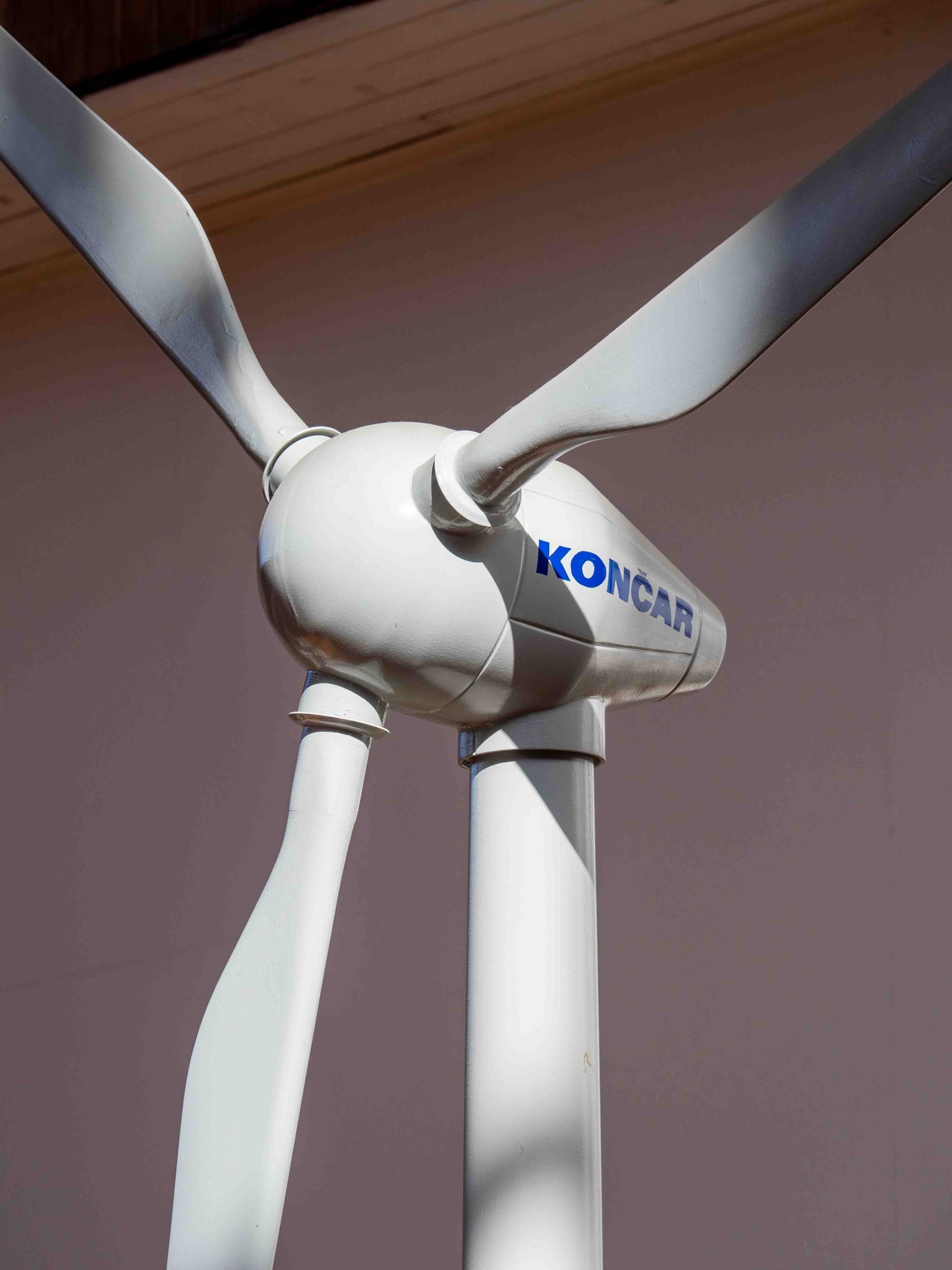
Rationing electricity for new data centres and artificial intelligence businesses is bad for our economy. The government should be bolder, and expand the opportunities for private sector generation.
Introduction
It’s well known that BC Hydro has a looming energy shortage. The utility will have a deficit by 2030, and can’t meet the government’s own 2030 electrification goals, let alone serve all the new businesses who want to set up in this province.
After much ministerial dithering, the provincially-owned BC Hydro is belatedly moving to add more generation, but this likely won’t be online until 2031. We may become reliant on imports from the US again, even after the current drought ends.
This is still just a stop-gap measure, not a long-term solution. BC Hydro admits it can’t currently see how to generate enough electricity for the government to meet its 2040 or 2050 climate targets (in its words, “a clear and practical path to meet these targets is yet to be defined”).
It’s no surprise, then, that the government was forced to step in to ration electricity sales to new data centres and artificial intelligence businesses, both large users of power. Sales of electricity to these businesses over the allocated ration are banned. (For the remainder of this article I’ll use the term data centres to incorporate artificial intelligence businesses as well.)
This is bad for BC’s economy. Data centres create construction and operations jobs, pay corporate and municipal taxes, and help diversify our economy to make it less reliant on extractive industries.
Does it need to be this way?
Private power
The government seems to have accepted that BC Hydro needs help to meet today’s challenges. First in 2024, then again in 2025, we’ve had “calls for power” where private sector companies bid to build new generation, usually wind farms. BC Hydro then guarantees to buy their energy on behalf of its customers.
But this is now moving well beyond plugging short-term energy gaps while BC Hydro catches up with new generation of its own. It is now calling for “expressions of interest” from the private sector to provide the firm, reliable energy that BC Hydro itself usually provides from its hydro-electric generation. Only nuclear energy was excluded, leaving open the possibilities of hydro, geothermal, or even some form of natural gas generation.
BC Hydro may be buying private sector energy out of necessity rather choice, but there are benefits to this approach.
First, BC Hydro taps into corporate experience it doesn’t have, and may potentially learn from. Despite its name, BC Hydro does have diesel generation plants too, and might choose to add wind or other technologies to its own toolkit.
Second, private sector suppliers will take on some of the risk, such as building the projects on time and on budget. This could be helpful; BC Hydro’s Site C dam was a year late and almost double the $8.7 billion budget.
Third, and probably most important, BC Hydro doesn’t have to come up with the financing to build the new facilities, but instead guarantees to buy the electricity in future. It has committed to pay $16.8 billion over the next 30 years for the ten 2024 Call for Power contracts (plus one other).
Assuming that it would cost BC Hydro a similar amount to build that generation itself, private sector financing for the 2024 Call for Power alone has avoided adding nearly $17 billion, the cost of the Site C dam, to the provincial debt, which is already forecast to reach $235 billion by 2029.
Wasted opportunities
Despite these benefits, BC Hydro is still being cautious, buying power in relatively small increments, despite both 2024 and 2025 calls for power being oversubscribed.
I’m sure there are good reasons for this. Maybe BC Hydro is still figuring out just how much intermittent energy (like wind and solar) it can add to its system before it risks the kind of blackout that affected some 60 million people in Spain and Portugal last year. Utilities should be cautious about things like that.
Or perhaps it’s concerned about buying too much electricity. If the government scales back its CleanBC electrification plans or a planned liquified natural gas (LNG) plant doesn’t end up getting built, it could end up with a surplus on its hands.
Regardless, there appear to be ways to expand generation that we’re not taking advantage of. For one thing, BC Hydro says it has received interest from private sector companies in providing 19 gigawatts (GW) of firm energy, the equivalent of something like 15 Site C dams, and more than the utility’s total current capacity (13.4 GW). It’s most unlikely BC Hydro will take advantage of all these ideas, just as it didn’t take up all the bids for the calls for power.
There are even existing facilities in BC sitting idle. For example, Powell River Energy Inc., a subsidiary of Brookfield Renewable Partners, owns hydro-electric facilities that formerly powered a local paper mill that closed in 2021. It has applied for a permit to export its 700 gigawatt hours (GWh) of firm electricity per year to the US, after it appears BC Hydro was unable or unwilling to buy the power.
So we have a dilemma. BC Hydro is not buying energy that could help the government meet its climate goals or grow the economy, and the government is limiting new business in BC because there’s not enough energy.
Something is wrong here.
Think bigger
If it wants to resolve this dilemma, the government should rethink the electricity market in BC, and find more ways to allow private sector companies to participate.
There are several benefits to this, in addition to those listed above.
First, if larger customers such as data centres were able to buy more private sector electricity directly, that would leave more of BC Hydro’s own generation for residential and commercial customers. Their demand is expected to increase as the government promotes electric vehicles and heat pumps in pursuit of its climate goals. The 400 megawatts allocated to data centres, limited though this ration is, will make the climate targets even harder to hit.
Second, BC Hydro could avoid the risk of investing in too much generation where the demand is uncertain. Data centres are an obvious candidate here, as some proposed projects may not go ahead, especially if the current artificial intelligence bubble bursts. LNG facilities are another example; we’re still waiting for a final investment decision from the Ksi Lisims LNG facility, which was expected last December. Private sector generators could take the risk that customers don’t take the electricity they’ve asked for (and price it accordingly).
Third, BC Hydro would be able to conserve its capital for upgrading its distribution business to accommodate the additional demand from those electric vehicles and heat pumps, and for large-scale generation projects that no private sector investor would fund (e.g. nuclear or large hydroelectric projects).
Finally, as BC Hydro adds more generation, it may have to increase its rates for all customers, as its average cost rises with each new addition. The more that generation is provided directly by the private sector, the lower that risk is to BC Hydro’s customers.
We’ve been here before
Pessimists will point out that this has been tried before. The 2002 energy plan envisioned an expanded role for private sector generators, who would be able to sell directly to large customers using BC Hydro’s transmission system.
A “retail access” rate to allow large customers to buy electricity from independent power producers using BC Hydro’s transmission system was approved in 2005 and implemented in April 2006, but by 2011 no customers had ever used it, and it was ultimately cancelled by government order in 2014. The current government’s Direction 8 prevents the BCUC reinstating a retail access rate unless BC Hydro asks for one.
BC Hydro was probably correct when it described the 2006 retail access rate as “fundamentally flawed”, but we should be careful not to throw out the baby with the regulatory bathwater. BC Hydro acknowledges that the rate’s design had “unique features” not found in any other jurisdiction. Further, the two-tier nature of BC Hydro’s own large-customer electricity rates that was blamed for making retail access unattractive has since been abandoned.
Most of all, the world has changed in the last quarter century. Data centres will have to win a BC Hydro-run auction for the rationed electricity; the losers can’t buy it at any price.
Conclusion
BC Hydro has demonstrated that independent power producers can add generation in ways and at timescales it cannot. But BC Hydro itself is now a bottleneck, limiting how much generation it adds, and having the government restrict demand that it can’t serve.
The government should be bolder, and consider whether protecting BC Hydro’s monopoly in its current form is really in the public interest. An expanded role for private sector generation could support the provincial electrification program and economic growth.
To be clear, this is not about privatization – increased private sector generation doesn’t require the province selling any BC Hydro assets. But still, there will doubtless be objections even to thinking about the idea. The energy sector has many vested interests, not least BC Hydro.
Vaughn Palmer, the veteran BC political commentator, tells the story of a briefing in Victoria in the 1980’s when a finance official told him “The government does not run BC Hydro. BC Hydro runs the government”. He also recalls Bill Bennett, one-time minister of energy, saying three decades later he’d heard that line and “found some truth in it.”
Hopefully our new energy minister, allied with a former premier as BC Hydro’s new board chair, will be able to stand up to them and conduct a fair and dispassionate analysis. A truly independent inquiry wouldn’t be a bad start.