
The NDP’s support for climate issues has waxed and waned depending on its need for votes from the Green Party. If the NDP loses Saturday’s election, it will be due in part to its recent about-turn on the environment.
Introduction
Climate issues haven’t featured strongly in BC’s current election campaign, the main focus being on economic matters. Then last Sunday, a desperate-sounding Premier Eby opened the final week of the campaign by begging Green voters for their support to avoid defeat by the Conservatives.
The Greens have had a rather chequered working relationship with the NDP in the last decade. How might their climate-focussed voters view the NDP today?
Real leverage
In the 2017 election, the NDP took power from the Liberals only thanks to a “confidence and supply” agreement whereby the Greens provided their three votes to give the NDP a majority in the Legislature.
This situation gave the Greens real leverage, which they used. Among other things, they required the NDP to intervene in the Trans Mountain Pipeline expansion project and implement “a climate action strategy to meet our targets”.
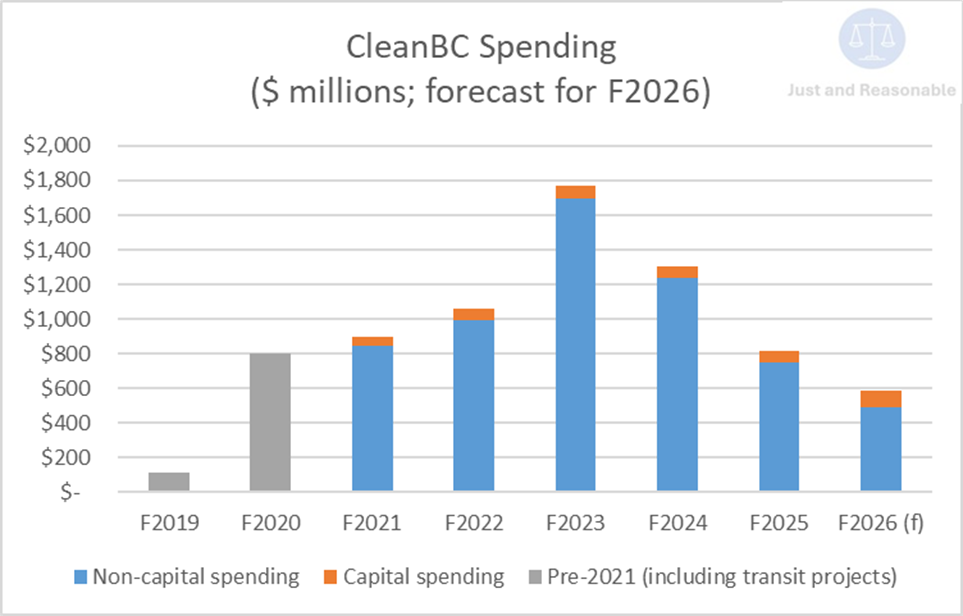
Premier Horgan did attempt to stop the pipeline. But after much delay (and legal expense), the Trans Mountain Pipeline expansion went ahead anyway. The NDP was more successful launching a climate action strategy: CleanBC, on which the government had spent $7.5 billion by the end of F2024.
Betrayal
Despite opposition from the Greens, Premier Horgan was able to push through approval for LNG Canada’s export facility in 2018, including tax breaks of $6 billion over 40 years, in part thanks to his claim the facility would use clean electricity from the new Site C Dam. It won’t, as Minister Dix has confirmed; it’ll be using gas for fuel.
The Greens’ influence was then undermined completely by the 2020 snap election, called (against the spirit if not the letter of the confidence and supply agreement) by Premier Horgan. The NDP gained a clear legislative majority of its own, and its priorities started to shift.
The Greens regained some leverage after the 2024 election, when the NDP’s majority under Premier Eby was reduced to one vote. However, the agreement they signed March 12, 2025, to support the NDP was weaker than the 2017 version and contained little climate-related substance.
Reality sets in
Spending on CleanBC peaked in 2022/23 (F2023), the year of the budget surplus, and has declined as rapidly as the province’s financial situation:
As the province’s financial situation has deteriorated, the NDP has become ever more dependent on fossil fuel-related projects to boost jobs and tax revenues. Chief among these has been facilities to export liquified natural gas (LNG), and the NDP has weakened environmental protections to support them.
For example, in March 2025, the newly-appointed Minister of Energy clarified (i.e. weakened) the government’s policy on climate emissions from LNG facilities. Instead of achieving net zero emissions by 2030, LNG facilities would only be required to be “net-zero ready by 2030”, and would not be required to use clean electricity.
This set the stage for the government’s approval in September of an Environmental Assessment Certificate for the proposed Ksi Lisims LNG Facility, allowing it to use electricity from gas generators if BC Hydro can’t deliver reliable power to the site.
This year, the government announced a new marine LNG export facility in Delta (exempting it from a public interest review by the BC Utilities Commission), and LNG Canada confirmed it would double production at its (gas-fueled) Kitimat site, an expansion supported by the NDP despite their earlier opposition.
Generational issues
The NDP has also had to deal with another mess largely of its own making: BC Hydro’s electricity shortages.
It took four and a half years from the publication of the CleanBC plan before provincially-owned BC Hydro acknowledged that it wouldn’t have enough electricity to meet the government’s own electrification plans, never mind supporting new businesses such as data centres. Valuable time was lost, leaving the utility with fewer options for building clean and reliable generation.
Having no better options, BC Hydro revealed in May 2026 that it will need to use two gas-fired generators for reliable electricity in the next few years. BC Hydro later announced it would buy one of the two gas plants, and Minister Dix exempted the purchase from an independent review by the BC Utilities Commission
Even when it has pursued clean generation options, the NDP has been forced to cut corners. In May 2025, the government used Bill 14 to bypass the Environmental Assessment Office, exempting BC Hydro’s new wind generation projects from the need for environmental review.
Finally, Minister Dix announced legislative changes to allow BC Hydro to consider building two new hydroelectric dams; one at Site E on the Peace River; the other at Homathko near Bute Inlet, which may affect the Homathko Estuary Park or the Homathko River Protected Area. This could be the last straw for some environmentally-minded voters.
Track record
Many of the NDP’s more recent actions have the benefit of promoting jobs and tax revenues in BC. They are also starting to undo some of the damage they caused by failing to recognize and act on BC Hydro’s electricity shortages soon enough.
But there’s little doubt that they are not decisions climate-concerned voters will be happy with. And the results speak for themselves.
BC’s greenhouse gas emissions have barely changed since the NDP was elected, dropping from 64.2 mega tonnes (mt) to 61.1 mt since 2016. Worse, LNG Canada Phases 1 and 2 are each estimated to emit 2.1 mt per annum, which will more than erase the small gains made since the NDP came into power.
The current Energy Minister has admitted there’s no way we will meet the 2030 legislated target for emissions reduction.
Conclusion
The Green Party’s agreement with the NDP broke down in acrimony at the start of 2026, with the Greens announcing it would not be renewed, blaming a failure to “deliver on 2025 commitments” and claiming the NDP “broke the trust that agreement depended on”.
Premier Eby’s recent plea for support was met with a curt response from the Green Party, which said that voters are asking for a “government that keeps its word”, presumably not referring to the NDP.
A political scientist quoted in The Narwhal recently pondered whether climate-concerned voters would vote NDP or Green, or just stay home.
Their decision may determine the outcome of Saturday’s election.