
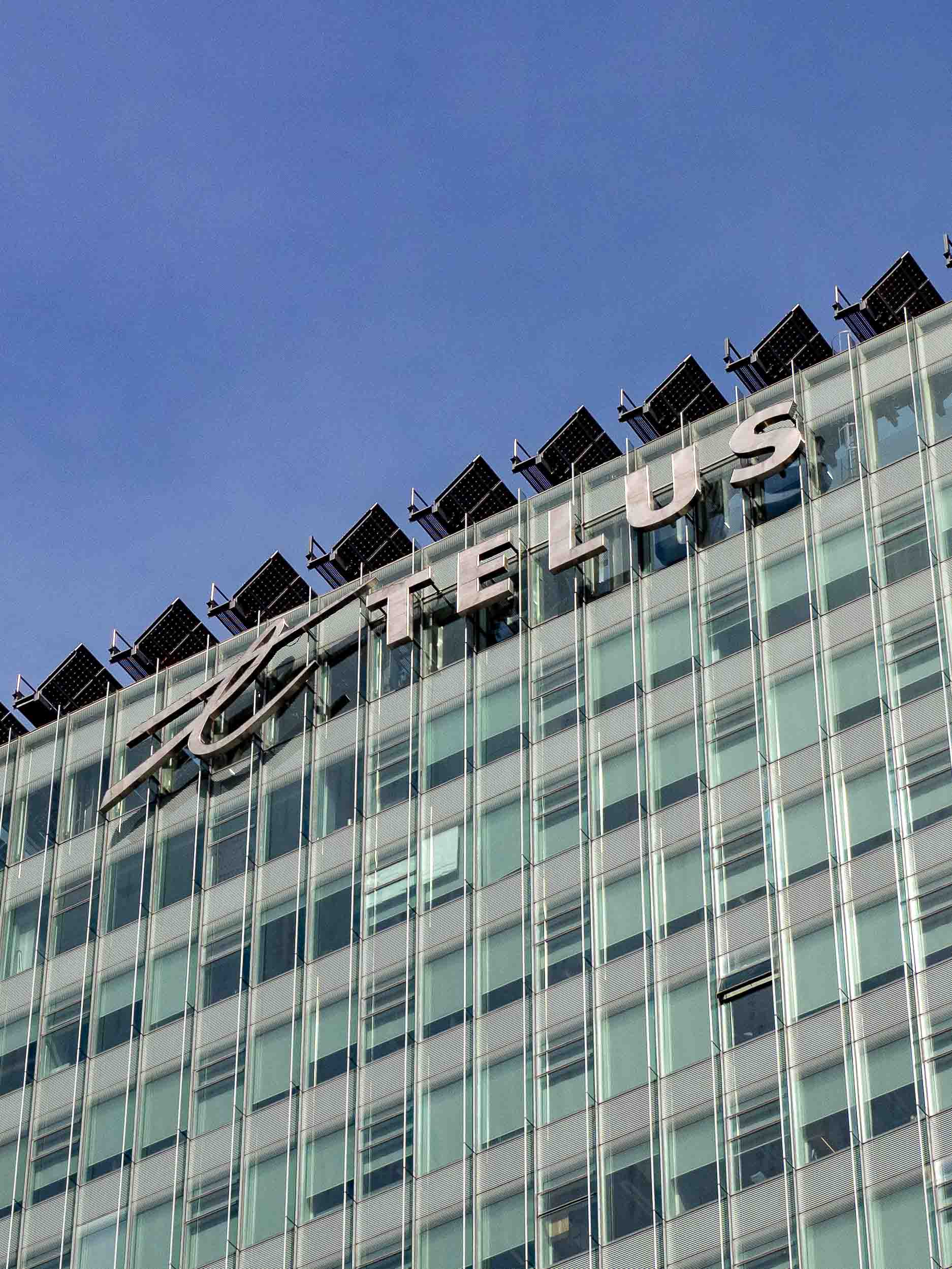
BC stands to gain from local artificial intelligence data centres, but this deal raises questions about BC Hydro’s competitive process to allocate rationed electricity.
Introduction
Earlier this month TELUS, a Vancouver-based telecommunications company, and the federal government jointly announced that they would work together on “sovereign AI [artificial intelligence] infrastructure” in BC. This relates to a federal program announced in the 2025 budget to provide nearly a billion dollars over five years to boost Canada’s AI capacity, although there’s no indication yet that TELUS is receiving federal funds under this program.
TELUS says it will expand an existing data centre in Kamloops, and build two new ones in Vancouver with locally based property developer Westbank. The data centres will be equipped with the latest NVIDIA computing technology and powered by electricity from BC Hydro.
All this activity could bring 1,000 short-term construction jobs and 525 permanent jobs, and boost the Canadian economy by $9 billion (or $10 billion, if you listen to Darren Entwistle, the TELUS President and CEO).
But the timing of the announcement is odd. Let me explain why.
A question of power
AI technology will be critical to future economic growth, and not just for the big US technology companies developing “frontier models” like ChatGPT. Established companies are starting to use AI to become more efficient, and startups will use it to create entirely new services.
If we want AI use to be subject to Canadian laws, such as those protecting personal information, we need to have technology that operates within our borders. In addition, information stored outside Canada can be subject to access by foreign governments; this is supposed to be harder if the data are kept in the country.
But AI requires a lot of energy to run. So much so, that the size of a data centre is usually measured these days in the amount of electricity it consumes (in megawatts, or MW), rather than more prosaic metrics such as square footage.
And that’s a problem in BC, because we don’t have enough electricity. By the way, don’t be misled by a recent report that the long-standing drought is over, and BC Hydro will soon be exporting power again. Even if this is true, and I hope it is, BC Hydro’s own forecast shows it will have insufficient electricity by 2030 even once normal water conditions return.
Winners and losers
The provincial government, which owns BC Hydro, has finally stopped dithering and is taking steps to buy power from the private sector. But new generation projects take years to build, and they won’t be available in time to meet the upcoming deficit.
Since data centres take a lot less time to build than wind farms, the government announced last October it would ration their use of electricity. New AI data centres have been allocated a total of 300 MW of power for the two years from February 1, 2026, in a “competitive” process (plus there’s a further 100 MW for non-AI data centres, which could end up being used for AI as well).
In response to questions in the Legislature last year, Energy Minister Dix was at pains to say that cabinet would not be “picking winners and losers”, which might open the government up to accusations of favouritism or even corruption. Instead, the competition would be run at arm’s length by BC Hydro in a “process, which would be transparent”.
And that’s what makes the TELUS announcement rather odd. BC Hydro’s Call for Demand is still underway, and the winners won’t be notified until mid September 2026. How does TELUS know that it will have enough power for its new data centres?
The short answer is: it probably doesn’t.
Is TELUS short circuiting the process?
TELUS says it will be using more than 150 MW of power by 2032, but in the small print it acknowledges it has only “secured” 85 MW from BC Hydro so far. This appears to be enough for the first of the three data centres, in Kamloops, to come online this year. TELUS is silent on where the remaining power will come from.
BC Hydro confirmed to me that the 85 MW of power was secured prior to the competitive Call for Demand, and that requests for additional power would “likely need to compete alongside other proposals” (TELUS didn’t respond to my inquiry).
TELUS appears to be jumping the gun by announcing the rest of its data centre expansion as though the supply of electricity from BC Hydro was a done deal. The press event had the flavour of a celebration for the outgoing Mr. Entwistle, who retires in June after 26 years at the helm. Presumably no one wanted to spoil the party by making the announcement contingent on a competitive bid.
Still, it does leave BC Hydro in a slightly awkward position. If they announce in September that TELUS will get the electricity it needs, it might look like their “competitive” process was nothing of the sort, and that the result was predetermined. BC Hydro may even be open to legal challenges from unsuccessful bidders in the Call for Demand.
This might explain why neither BC Hydro nor the provincial government issued press releases about the new AI data centres, and Energy Minister Adrian Dix was “unable to attend” the presentation celebrating the announcement (although the Minister for Jobs and Economic Growth, Ravi Kahlon, was present).
Conclusion
We need AI data centres like these to foster innovation and economic growth while retaining legal jurisdiction over Canadian data and intellectual property, and TELUS is one of the few technology companies headquartered in BC.
But this announcement feels rushed. TELUS should have been clearer that BC Hydro’s electricity is not guaranteed, even if that spoiled their CEO’s goodbye party.
According to the Globe and Mail, Evan Solomon, Canadian Minister of Artificial Intelligence and Digital Innovation, said that the federal government will approach its work with TELUS with “prudence, promising transparency and rigour”.
I certainly hope so. This wasn’t a great start.