

The trend is improving, but we’re still feeling the effects of the drought
Annual reports
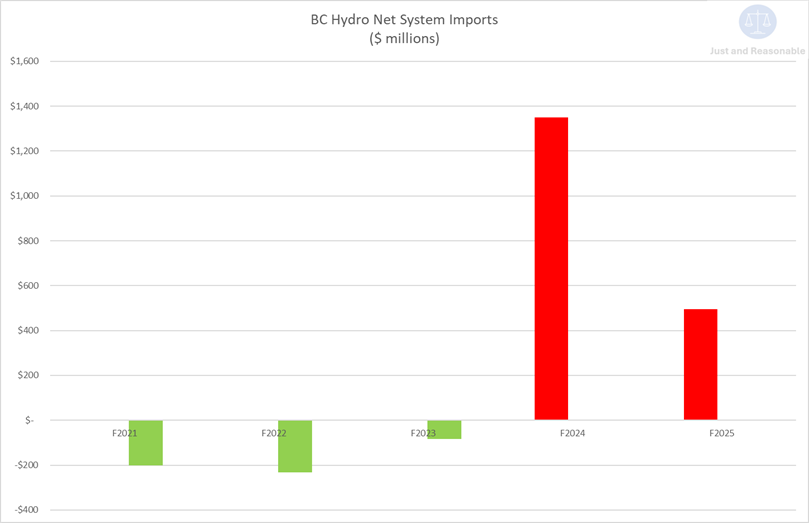
According to BC Hydro’s annual report to the BC Utilities Commission (BCUC) for 2024/25 (F2025), it imported more electricity than it exported for the second year in a row. The $496 million cost of the net imports was less than the previous year ($1,351 million), but in total BC Hydro has imported $1,847 million of electricity in the last two years:
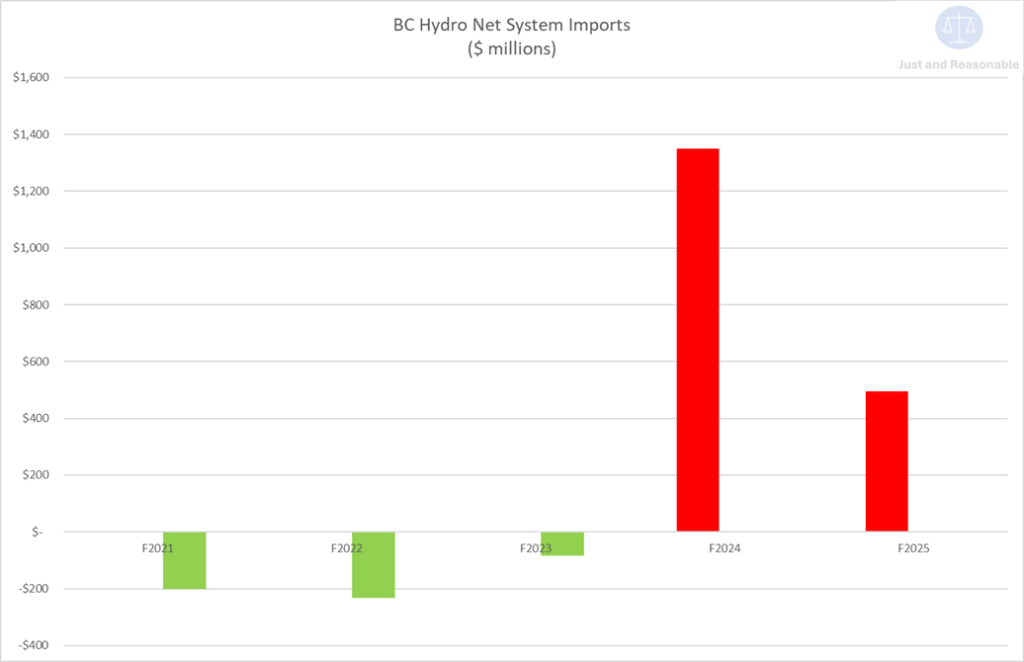
The improvement in F2025 was probably due in large part to the new Site C dam coming into service. In fact, the amount of energy imported in F2025 was 5,243 gigawatt hours (GWh) less than the year before, almost exactly the same as the amount of energy Site C produces in a year.
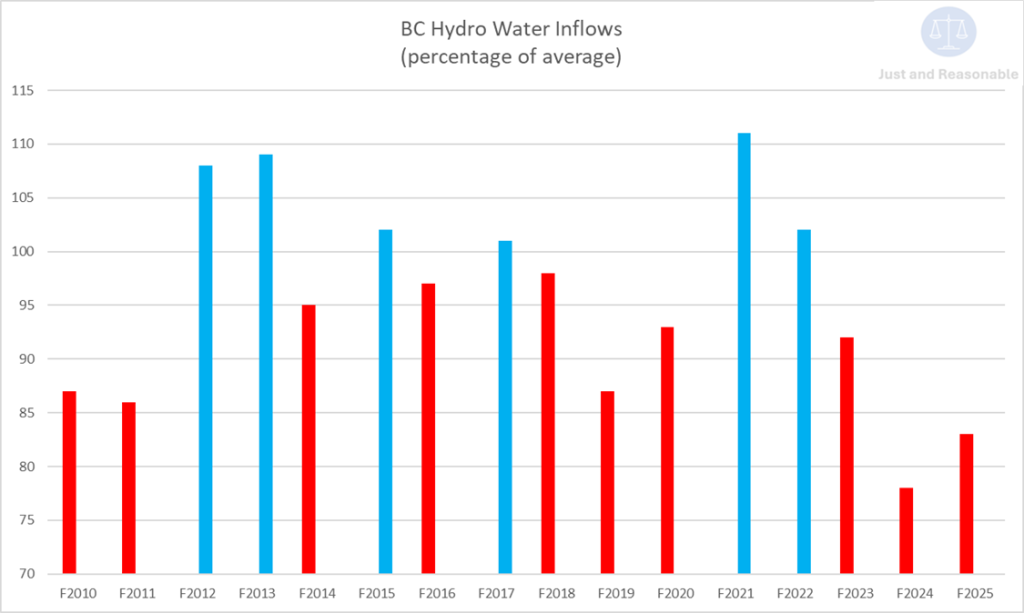
But the water inflows into BC Hydro’s dams improved slightly in F2025 as well, although they’re still not up to the historical average, as we can see from the data below:
Looking forward
BC Hydro’s second quarter results show that water inflows to September 30, 2025 were still below average due to the low snowpack in spring 2025, but at least they’re better than the previous year. As a result, the utility had net system imports of 2,041 GWh in the first six months of F2026, overspending its budget by $110 million (which will be collected from ratepayers in future).
How to find the data
BC Hydro discloses the amount of electricity they import and export each year in their annual service plan report, but not the financial amounts. For that, we need to look at their annual report to the BCUC. The last five years’ worth of these reports can be found close to the bottom of this page on BC Hydro’s website.
The system imports and exports figures can be a bit hard to find, as the PDF documents aren’t fully searchable. For F2025, go to PDF page 192, and for F2024 go to PDF page 54.
BC Hydro stopped reporting its water inflow percentages in the annual report after F2019, but they provided the data to me in response to a freedom of information request.