
The new project will bring jobs, tax revenues and environmental benefits. But gas customers are unwittingly and unfairly at risk for billions of dollars.
Introduction
On July 24, the provincial government announced a new $2.2 billion liquefied natural gas (LNG) marine refuelling facility at Tilbury in Delta, BC.
FortisBC Energy Inc. (FortisBC) will construct the facility, which includes a new jetty and a cryogenic pipeline to allow marine vessels to dock and refuel with LNG, starting next year and coming into service as soon as 2031.
The project is expected to create 1,100 jobs during the four years of construction, tax revenue of $260 million, and up to $20 million per year in natural gas royalties for the province once the LNG is flowing.
There are also environmental benefits. LNG is a cleaner fuel than diesel and other “bunker fuels” used by marine vessels, and could reduce their greenhouse gas (GHG) emissions by as much as 25 percent.
The government has exempted the project from the need for a Certificate of Public Convenience and Necessity (CPCN) from the BC Utilities Commission (BCUC) prior to construction, ostensibly to provide “greater regulatory certainty”.
Let’s take a look at what’s really going on.
A competitive business?
The BCUC regulates energy services in BC, such as gas or electricity distribution to ensure safe and reliable service for consumers, and to prevent abuses of power by monopolies.
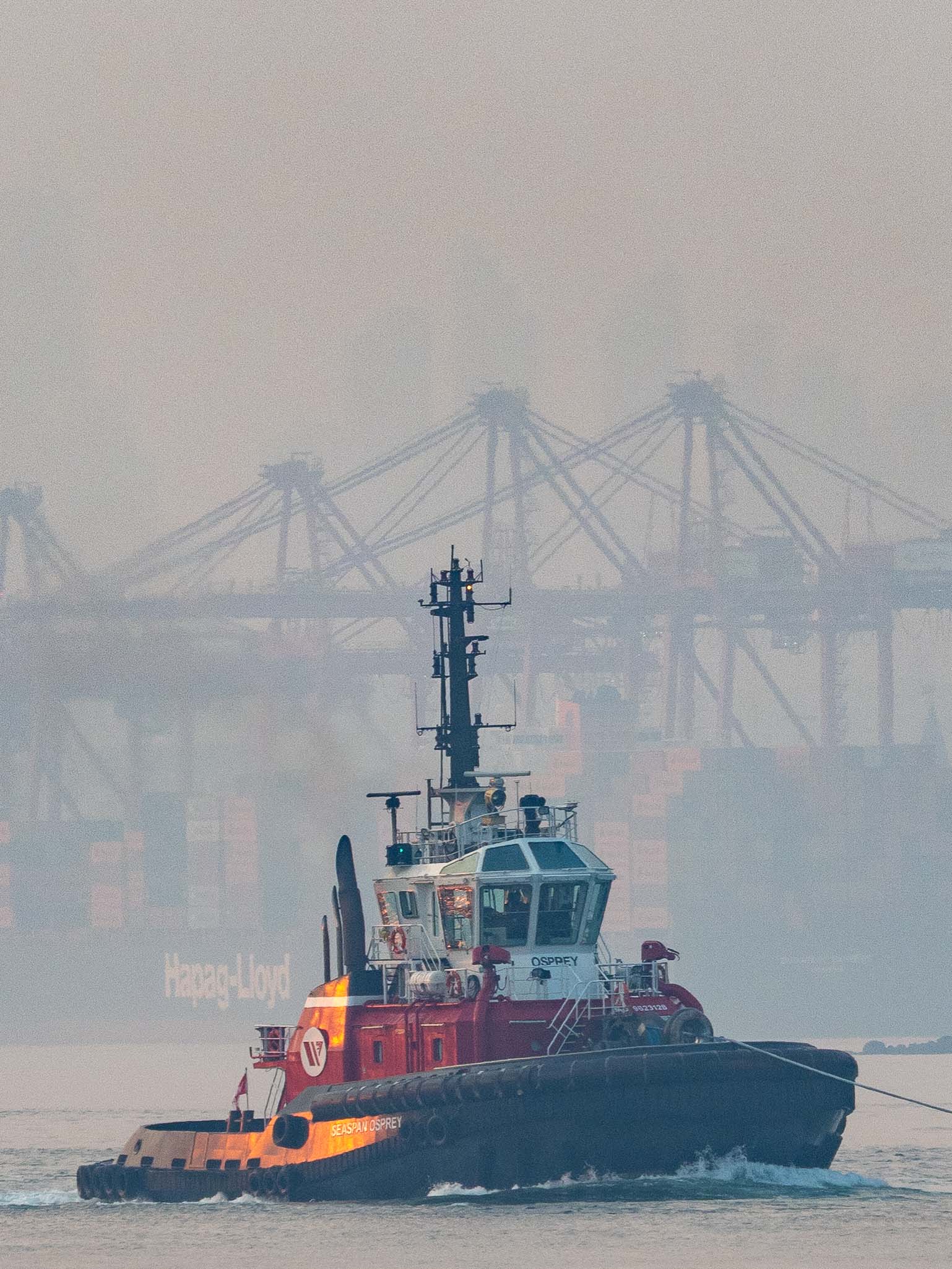
But distribution and sale of LNG are not usually regulated by the BCUC, thanks to a specific provision of the Utilities Commission Act. Seaspan Energy, for example, has a fleet of specialized vessels that provide ship-to-ship LNG refuelling in Vancouver and beyond, and is not regulated by the BCUC.
The BCUC does, however, regulate an existing public utility such as FortisBC if they want to offer LNG-related services. The BCUC looks at whether the scope of service is appropriate for a monopoly provider, and seeks to ensure that existing customers are not harmed as a result.
Regulatory certainty
The BCUC has previously been cautious about approving FortisBC investments in LNG.
For example, in 2012 the BCUC denied a request from FortisBC to use ratepayers’ funds to invest in a mobile LNG refuelling truck because utility customers should not “shoulder the burden/risk of the cost” of the asset. The BCUC found that FortisBC shareholders should take the risk of that investment, and recover the costs, if they could, directly from LNG refuelling customers.
By exempting the marine LNG refuelling facilities from the need for a CPCN, the government has indeed, as it claims, provided “greater regulatory certainty” for the project. It has made certain that the BCUC will not be able to prevent FortisBC making the investment or restrict its use, even if this might harm its existing gas customers.
The exemption also means there will be no independent scrutiny of the project before it starts. How big is the market for marine LNG refuelling? Are the proposed facilities oversized for the market? Are there better or cheaper ways to serve these customers? None of this will be examined, yet it is crucial to understanding how risky the business is.
There’s more…
If that were all the government’s exemption order contained, it would be bad enough. But it goes much further than that.
In addition to using the CPCN process, the BCUC can protect existing ratepayers by ensuring that costs of a new service are properly allocated to its customers, and there is no cross-subsidy from another group of customers or transfer of risk.
The BCUC has previously attempted to protect ratepayers from the risk of FortisBC’s forays into the transportation refuelling business. In 2011, the BCUC denied proposed terms and conditions for the sale of compressed natural gas (CNG) and LNG for truck refuelling because of “substantial potential costs” for existing ratepayers.
In particular, the BCUC was worried about FortisBC investments becoming “stranded” if refuelling customers ended their contracts before the assets were fully paid off – it didn’t want existing gas customers left on the hook to pay for them.
But the BCUC can only impose protections such as these when it is able to exercise its powers to set rates, which include terms and conditions. And the government has ensured the BCUC will not be exercising its rate-making powers over FortisBC’s marine LNG refuelling services.
At this rate…
First, the government directly set the rates for the marine LNG service: a marine jetty service charge of $1.3 / gigajoule of LNG delivered; a loading charge of $150 per hour; and a demurrage charge (for outstaying your welcome at the jetty) of $500 per hour.
Second, the government permitted FortisBC to load all the costs and revenues of the marine LNG business onto its long-suffering gas customers. If the business loses money in the early years, which is quite likely for a start-up with high fixed costs, they will cover the losses.
The reverse is also true. If the marine LNG business is very successful, it’s possible existing ratepayers will receive a surplus of revenues over costs. But I consider this unlikely. The rate was most likely set to do no better than break even (after providing FortisBC’s regulated return on investment) in the event the business is successful. Since we don’t get to see the numbers, we can’t be sure.
Without independent scrutiny by the BCUC, which the government has prevented, we have no assurance that the rates will be sufficient to cover the costs, or that the terms of service for refuelling customers will protect existing ratepayers.
What protection?
But what about the claim that the order provides “regulatory mechanisms to protect FortisBC ratepayers from rate impacts due to the large investment”? The government provides no explanation, but here’s the most charitable explanation I can come up with.
The government has allowed FortisBC to create two regulatory deferral accounts for the marine LNG business. These deferral accounts will store up any losses incurred in the first ten years, so they don’t need to be passed on immediately to existing gas customers.
Presumably the hope is that the marine LNG business starts earning an operating surplus within the first ten years, and these surpluses will offset any accumulated losses in the deferral accounts, leaving nothing left to collect.
But this isn’t really much protection. For one thing, only the first ten years of losses can be captured in these deferral accounts. If the marine LNG business is still losing money after ten years, these future losses can’t be deferred and will be collected immediately from all gas customers. And any accumulated losses in the deferral accounts don’t just disappear at the end of ten years, either, someone needs to pay for them.
Risk
It’s possible FortisBC’s marine LNG refuelling business will be successful, and I certainly so. As the global shipping industry moves to decarbonize, new container ships are increasingly able to run on methane to reduce GHG emissions.
Seaspan Energy’s investment in LNG refueling ships is also encouraging – it shows that some investors are willing to bet on LNG as a marine fuel even when they don’t have captive utility ratepayers to take the risk for them.
But FortisBC’s success is by no means certain, as a recent World Bank report shows. There are alternative low-carbon fuels, and if LNG turns out not to be the long-term solution to decarbonizing the world’s shipping fleet, FortisBC’s ratepayers may end up paying for some very expensive stranded assets.
Conclusion
The government should not have allowed FortisBC to offload the risk of its marine LNG refuelling service onto existing ratepayers.
This is unfair – the benefits of the project, such as economic growth and tax revenues, accrue to BC’s population as a whole, not just FortisBC’s gas customers. Also, adding costs to utility ratepayers disproportionately hurts lower-income customers.
There were alternatives. If FortisBC shareholders weren’t willing to take the risk, the government could have supported them with tax revenues or loan guarantees. Yet again, though, it chose to impose the cost of its policies on unwitting utility ratepayers, avoiding the scrutiny in the legislature that might come with the alternatives.
We’re used to this government preventing the BCUC acting as an independent regulator of BC Hydro, the provincially owned electricity monopoly. One only needs to think of the investment in the North Coast Transmission Line and BC Hydro’s current rates.
The latest action is a stark reminder that this government doesn’t hesitate to interfere with the independent regulation of investor-owned utilities as well.
Ratepayers beware!