
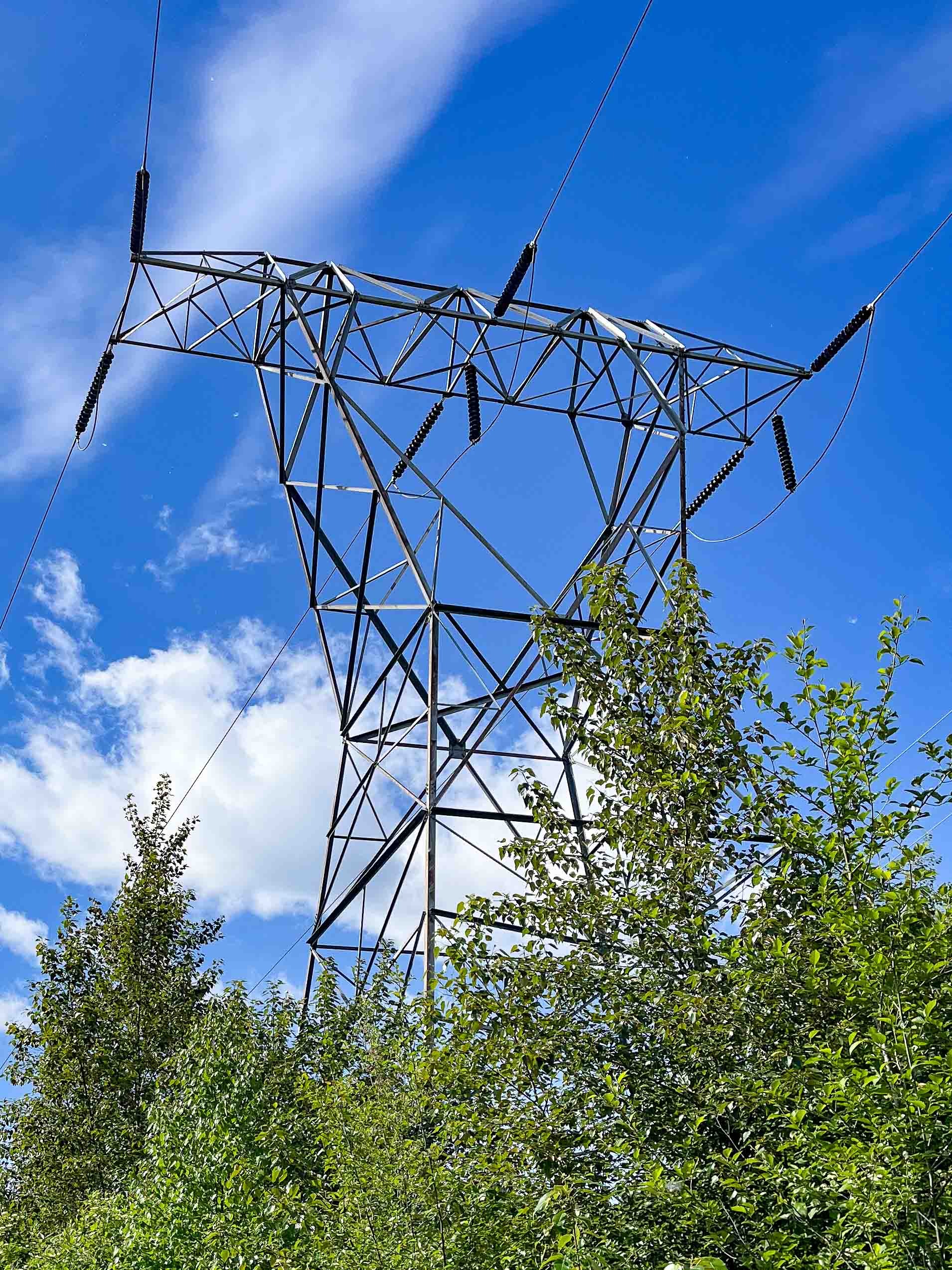
The funding reduces the risk faced by BC Hydro’s ratepayers, and the project now looks increasingly likely to go ahead.
Introduction
Last week, the BC and Federal governments announced a “landmark agreement” covering a broad range of topics, many of them related to energy. Much of the attention has been focused on the proposed oil pipeline from Alberta to the West Coast, which BC has agreed not to obstruct, but the agreement also included Federal funding for BC Hydro’s proposed North Coast Transmission Line project.
It’s time to take a look at where we stand with this project.
Background
Phases 1 and 2 of the proposed North Coast Transmission Line would expand BC Hydro’s existing transmission line between Prince George and Terrace, in BC’s north coast region. A third phase could extend the line north to Bob Quinn Lake, and further extensions south and west of Terrace are also under consideration.
The potential users of the new transmission line are industrial electricity customers, including a liquefied natural gas (LNG) plant, mines and port facilities. The new line is not planned to serve residential customers.
The provincial government claims that once operational, the North Coast Transmission Line “is expected to create approximately 9,700 direct full-time jobs, contribute nearly $10 billion per year to GDP and generate approximately $950 million annually in public revenues for the province and municipal governments.”
Phases 1 and 2 of the North Coast Transmission Line are expected to cost $6 billion. There is no costing yet for Phase 3.
Field of Dreams
The provincial government decided unilaterally that the North Coast Transmission Line project should go ahead. It exempted the project from review by the BC Utilities Commission (BCUC), so there will be no independent assessment of the need, or whether there are better alternatives. There will be no environmental assessment done, either.
Naturally I’m disappointed that the government has, yet again, bypassed the regulator that is supposed to provide scrutiny of projects like this. It undermines the BCUC’s independence, and reinforces the idea that regulation of provincially owned BC Hydro is only tolerated by government when it’s convenient (to have someone else take the blame for rate increases, for example).
Still, I can understand why the government acted as they did.
New large industrial customers are expected to pay for extensions to BC Hydro’s high-voltage transmission system needed to serve them. This is fine in principle, but causes a “chicken and egg” problem if the first customer finds it uneconomic to pay for the cost of the entire extension. A second or third customer could share the cost and make it economic for all, but the extension will never be built until it gets its first customer.
The chicken and egg problem has been solved for the North Coast Transmission Line because the project will be funded by BC Hydro, without waiting for any customers to commit. Build it and they will come, in other words.
That raises the question: Who takes the risk?
Moneyball
The government has decided that all BC Hydro’s ratepayers will pay for the cost of building the North Coast Transmission Line, whether or not it gets any customers. To do this, it overrode the BCUC’s independent rate setting powers (again).
I’ve previously argued that it would be fairer for taxpayers to take this risk. When ratepayers pay for government policy choices, the low-income, hard-working families the government professes to care so much about end up contributing proportionately more though their electricity bills as they pay the same rates as everyone else. Taxpayer funding is also more appropriate when the benefits flow to the economy as a whole and not just to electricity ratepayers.
That’s why the Federal Government funding is welcome. Canada is committing to $3.9 billion in “financial support” for Phases 1 and 2 of the North Coast Transmission Line. Since many of the benefits from the mines and ports that are expected to use the line will accrue to the economy nationally, Federal funding is appropriate here. And anyway, the provincial government is broke (sorry, I mean “not in a position to responsibly add to its current debt load”).
It’s not clear quite how much the Federal government is really contributing though. The total figure includes “capital cost savings from access to low-cost financing, the Clean Electricity Investment Tax Credit, and First Nation equity supports”, which suggests the $3.9 billion isn’t all cash that would reduce the $6 billion total, but it’s certainly an encouraging start. Details are promised by December 1, 2026.
But this still leaves BC Hydro’s ratepayers on the hook for maybe $3 billion. How likely is this risk to materialize?
Are the bases loaded?
If the North Coast Transmission Line is not used at all, BC Hydro’s electricity rates could rise at least one percent ($3 billion cost over 50 years is $60 million per year, on top of BC Hydro’s revenue requirement of around $6 billion, and that doesn’t include financing costs).
This is probably the worst case, although it assumes the work comes in on budget, not a common feature of public sector infrastructure projects. If the North Coast Transmission Line costs more than $6 billion, rates could go up further.
But I think the risk of the North Coast Transmission Line being seriously underused is low. The risk can also be managed – if no new customers commit in the first couple of years, construction could be abandoned before too much is invested.
BC Hydro says (in a footnote on page 20) that there are six large loads in its interconnection queue located in the North Coast region. The only one whose identity we know is the Ksi Lisims LNG plant, which would take 600 MW of power. The investors in Ksi Lisims haven’t decided yet whether to proceed, and a memorandum of understanding with BC Hydro signed in January doesn’t appear to include any commitments to purchase electricity.
However, there is progress towards a positive investment decision. Ksi Lisims is on the Federal Government’s “referred projects” list, alongside the North Coast Transmission Line, Federal funding for which may be viewed positively by Ksi Lisims’s investors. Most encouragingly, Ksi Lisims has already signed agreements with four parties to take its LNG, representing 7 million of the total 12 million tonne capacity, and two indigenous groups recently withdrawal their legal challenges to the project.
None of the other potential customers for the North Coast Transmission Line have been publicly identified as far as I’m aware, although it’s possible some of them are projects on a list unearthed by the Narwhal last year, such as the Galore Creek and Shaft Creek mines, which may be willing to buy 307 MW and 186 MW of power respectively.
Given the new-found enthusiasm by both levels of government for growing the economy, including a specific focus on exporting energy and minerals, I’d say the signs are good that at least some of these projects will come to fruition, and will need electricity delivered to the North Coast region.
Out of left field
An intriguing idea in the longer term is delivering power to the Yukon. The Federal announcement says the North Coast Transmission Line will include “a proposed Yukon-British Columbia Grid Connect that will increase the Yukon’s energy security and affordability”. BC and the Yukon signed an MOU in May 2025 to explore this, including “potential extensions of the North Coast Transmission Line”.
There are still many unknowns here, and nothing that will address the risk of underuse of Phases 1 and 2 in the short term. Still, the Federal government has committed to make progress of some sort on phase 3 of the NCTL by June 1, 2027. Perhaps Phase 3 of the NCTL will head all the way to the Yukon border?
Conclusion
It looks increasingly likely the North Coast Transmission Line will go ahead. BC Hydro’s ratepayers will be on the hook for billions of dollars if it’s underused, and the large industrial customers using the line won’t have to pay for it. The government has ridden roughshod over the regulatory processes that are intended to protect the public interest. Not a pretty picture.
To its credit, though, the provincial government is making progress on a large-scale electricity system expansion that would bring jobs and enable other economic benefits to BC and to Canada. Energy Minister Dix said in last year’s legislative debate on the North Coast Transmission Line that they would be “working hard” to secure Federal government funding, and they appear to have done just that.
There is still one big question outstanding, though. Where is BC Hydro going to get the electricity for all these new industrial customers? If it can’t, it’s hard to see how the North Coast Transmission Line will be successful. This will be the subject of an upcoming Just and Reasonable article.
Stay tuned…